Tuesday, September 28, 2010

Nokia N8 to be previewed exclusively at MAC 2010


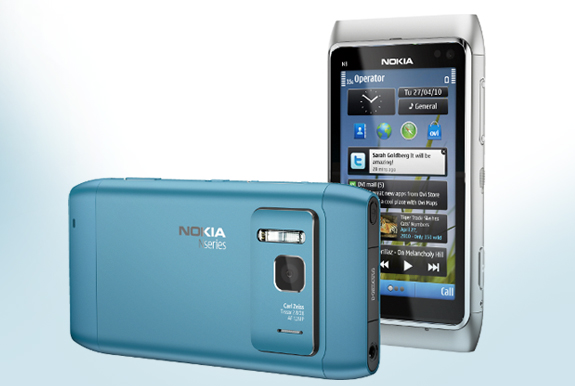
The latest offering from the house of Nokia, the Nokia N8 will be previewed exclusively for the Indian customers at the Mobile Application Conference (MAC) India 2010 on September 25 in Bangalore. The Nokia N8 is the first device in the world to run on Symbian 3 operating system.

The device boasts of a 12 megapixel camera with Carl Zeiss optics and Xenon flash. The camera also packs in special features like geo tagging and face and smile detection. The phone is capable of HD video recording. You can also edit your videos and share them all through the phone.


The N8 guarantees entertainment with Web TV and can also be hooked to TV or home theatre system. It also pulls feeds and updates from social networking sites like Facebook and Twitter.

What is more exciting is that you can personalize the phone by creating your own widgets. It also has voice-guided navigation for over 70 countries in the world. The phone is available in an exciting range of colors like Dark Grey, Silver White, Green, Blue and Orange.

Although the India launch date has not yet been revealed, you can be experience the smartphone here in your own backyard courtesy Nokia and MAC.

Sony Ericsson ditches Symbian in favor of Android

Android is gaining ground in the mobile operating system arena. And it is expected to reach the top spot by 2013. With this background, it comes as no surprise that Sony Ericsson has officially confirmed that it will stop producing Symbian based smartphones in future, and will switch over to Android platform for most of its products.
Sony Ericsson ditches Symbian in favor of Android


The last of Sony's smartphones to run on Symbian will be the Vivaz and the Vivaz Pro.

The confirmation comes from a Sony Ericsson spokesperson who said, "We have no plans for the time being to develop any new products on the Symbian Foundation standard or operating system."

Although Sony will continue to remain a member of the Symbian Foundation, the company's Chief Creation Officer, Rikko Sakaguch has also confirmed about its future with the Android platform.

Although Symbian is still the most popular platform for smartphones, popularized by Nokia, its market share has drastically fallen from 41.2 percent in Q2 this year as compared to 51 percent in the same period last year. Reports also mention that the markets for iOS and Android have increased significantly in the same time frame.

Other smartphone makers like Samsung and LG have also cut back on their support for Symbian.

As Sony prepares to gain market share by switching to Android from Symbian, the company has been condemned for its slow upgradation of Android platforms. At a time when device makers are releasing Android 2.2 ready devices in market, some of Sony's Android 2.1 models are yet to hit the market that were scheduled to hit shelves this month.

At this point, we can only hope that Sony gears up and shifts to Android 2.2 to be in the race.

RIM unveils its tablet PC, the BlackBerry PlayBook

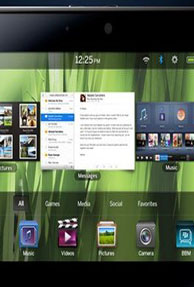
San Francisco: The anticipation is finally over. The curtains are up. The much in talks Research in Motion (RIM)'s tablet, called the BlackBerry PlayBook, was unveiled at the Developers' Conference. The 'enterprise ready' tablet has a seven inch screen.

Weighing less than a pound, the PlayBook will support Adobe Flash Player 10.1 (a feature lacked by the iPad) and is expected to go on sale early 2011. Nothing has been mentioned about the tablet's pricing.
RIM unveils its tablet PC, the BlackBerry PlayBook


Although the screen size of the PlayBook is smaller compared to its able competitor, Apple's iPad (9.7 inch screen size) but it scores over the latter in the camera section. The PlayBook has two cameras including a 3MP front facing one for videoconferencing.

The PlayBook features computer monitors and TV outlets for it to display material. The tablet will use a new OS, called the BlackBerry Tablet OS, developed by QNX Software Systems. QNX was acquired by RIM early this year from Harman International.

The device will run on a 1GHz dual-core processor, with 1GB of RAM as well as HDMI and USB ports. The PlayBook can be synced-up with other RIM handsets through Bluetooth. The device will be Wi-Fi enabled and will be followed by 3G and 4G tablets in future.

Michael Lazaridis, Co-Chief Executive, RIM said about the PlayBook that the new tablet contained several features requested by corporate information technology departments. He branded the PlayBook as "the world's first professional tablet".

Lazaridis emphasized on the fact that the PlayBook was fully compatible with the special servers that corporations and governments now used to control and monitor employees' BlackBerry devices.

While Apple has always been ahead of RIM in terms of number of applications, the announcement of the PlayBook was followed by Amazon announcing introduction of Kindle e-book application for the PlayBook.

Saturday, July 24, 2010

Nokia rings in C3, C6 and E5 phones in India


Bangalore: The Indian market is all set to see a new range of QWERTY phones from Nokia. A pair from the C series, C3 and C6, and an E series phone, E5, will be launched in the market. The C3 and C6 are priced at Rs. 5,300 and Rs. 13,000 respectively while the E5 comes at a price tag of Rs. 10,000.

All the three phones come with free push mail services. Anssi Vanjoki, Executive VP, Nokia said, "With these three new devices we are bringing in the Mobile Messaging and Social Networking to the hands of the people".


The C6 is a smartphone running on Symbian S60 and comes with a 3.2 inch touchscreen display and a slide out QWERTY keyboard. It loads a 5 MP camera with autofocus and flash. Also the C6 is preloaded with Ovi Maps and the Ovi Store applications.

Coming with 2.4 inch screen display, the C3 is a 2G and Wi-Fi enabled phone. With 2MP camera, the phone's memory can be extended up to 8GB.

The E5 designed for business professionals also runs in Symbian OS and comes with a 256MB internal memory and can be extended up to 32GB. The phone also has 2.3 inch display and a 5MP camera. One can connect the E5 through WLAN and High-Speed Micro-USB 2.0 to transfer and back up data.

All the three phones have social networking features common among them and will add on to the vast repertoire of Nokia's existing list of products.

Govt. unveils Rs. 1,500 laptops for students

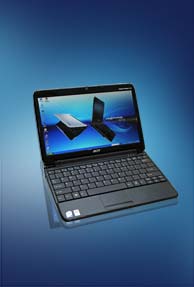
New Delhi: The Human Resource ministry unveiled a Rs. 1,500 (around $30)laptop which is designed specifically for students. The laptop will be available for the students in 2011.

"If more companies decide to manufacture a similar device, prices will come down automatically," Human Resource Development Minister Kapil Sibal said after unveiling the low cost-access-cum computing device here.


When the ministry floated the concept of a low cost laptop some years ago, officials said it would cost Rs.500 ($10). It will now cost about three times the initial projections.

The ministry expects the prices to drop to Rs.1,000 ($20) and reach Rs.500($10) as innovations are introduced.

The device, no bigger than a conventional laptop, is a single unit system with a touch screen and a built in key board along with a 2 GB RAM memory, wi-fi connectivity, USB port and powered by a 2-watt system to suit poor power supply areas.

"This is real and tangible and we will take it forward. Sun will rise for the Indian students in 2011," he said.

The ministry also invited private players to produce similar low cost computers.

"When we started the project, the response from the private sector was lukewarm. Now many are willing to join the innovation," Sibal said.

The ministry started its efforts by holding discussions on this concept with a group of experts at the Indian Institute of Science, Bangalore, IIT Kanpur, IIT Kharagpur, IIT Madras and IIT Bombay, a ministry official said.

The low cost laptops will be distributed in institutions by the HRD ministry. The final price will depend on the transportation cost.

"We will give some subsidy on the device. As far as transport is concerned, if the transport cost in less, the government can bear that as well," Sibal added.

Dell surpasses HP, tops the Indian PC market

New Delhi: Dell has surpassed HP and is now wearing the crown of being India's largest PC brand. Dell, which credited its early growth to its unique direct-to-home selling model, changed its strategy in India two years ago as the company assumed the traditional model of selling through shops and dealers would work better in India.


Just a year ago, HP was ahead of Dell by 1.5 lakh units in annual sales. Unlike HP, which defended its 'premium' image, Dell sold at prices comparable to those of Taiwanese competitor Acer. "Dell sold around 3.53 lakh PCs in the June quarter, compared with 3.31 by HP," said a source close to Dell, quoting market research firm Gartner's quarterly review.

According to the source, Dell had a market share of 14.3 percent in the overall PC market last quarter, followed by HP with 13.4 percent and Acer with 11 percent. Dell had a share of 27 percent in notebooks, selling around 2.35 lakh units the three months, compared with 1.79 lakh notebooks sold by HP.

Mobile banking to change banking in India

New Delhi: Over 250,000 panchayats will soon be connected with broadband connections, said Sam Pitroda, advisor to Prime Minister on public information.

"We are planning to connect 250,000 panchayats through broadband. We want to bring fibre cable to majority of them," he said at a seminar on financial inclusion.


He said mobile banking is the next big challenge for government and it will change the nature of banking in India.

"For the first time we are a country of 600 million connected people. However, we need to find out how we can use it for our benefit."

According to him, financial inclusion cannot be achieved without inclusive growth and every initiative should be directed at the rural poor.

"If merchants, bank and operator can come together, they can develop a platform for mobile banking," he said.

Pitroda said he is trying to set up new platforms for the new generation.