Bangalore: The Indian market is all set to see a new range of QWERTY phones from Nokia. A pair from the C series, C3 and C6, and an E series phone, E5, will be launched in the market. The C3 and C6 are priced at Rs. 5,300 and Rs. 13,000 respectively while the E5 comes at a price tag of Rs. 10,000.
All the three phones come with free push mail services. Anssi Vanjoki, Executive VP, Nokia said, "With these three new devices we are bringing in the Mobile Messaging and Social Networking to the hands of the people".
The C6 is a smartphone running on Symbian S60 and comes with a 3.2 inch touchscreen display and a slide out QWERTY keyboard. It loads a 5 MP camera with autofocus and flash. Also the C6 is preloaded with Ovi Maps and the Ovi Store applications.
Coming with 2.4 inch screen display, the C3 is a 2G and Wi-Fi enabled phone. With 2MP camera, the phone's memory can be extended up to 8GB.
The E5 designed for business professionals also runs in Symbian OS and comes with a 256MB internal memory and can be extended up to 32GB. The phone also has 2.3 inch display and a 5MP camera. One can connect the E5 through WLAN and High-Speed Micro-USB 2.0 to transfer and back up data.
All the three phones have social networking features common among them and will add on to the vast repertoire of Nokia's existing list of products.
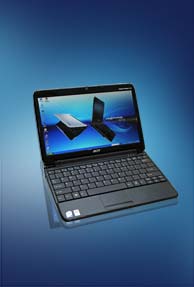
New Delhi: The Human Resource ministry unveiled a Rs. 1,500 (around $30)laptop which is designed specifically for students. The laptop will be available for the students in 2011.
"If more companies decide to manufacture a similar device, prices will come down automatically," Human Resource Development Minister Kapil Sibal said after unveiling the low cost-access-cum computing device here.
When the ministry floated the concept of a low cost laptop some years ago, officials said it would cost Rs.500 ($10). It will now cost about three times the initial projections.
The ministry expects the prices to drop to Rs.1,000 ($20) and reach Rs.500($10) as innovations are introduced.
The device, no bigger than a conventional laptop, is a single unit system with a touch screen and a built in key board along with a 2 GB RAM memory, wi-fi connectivity, USB port and powered by a 2-watt system to suit poor power supply areas.
"This is real and tangible and we will take it forward. Sun will rise for the Indian students in 2011," he said.
The ministry also invited private players to produce similar low cost computers.
"When we started the project, the response from the private sector was lukewarm. Now many are willing to join the innovation," Sibal said.
The ministry started its efforts by holding discussions on this concept with a group of experts at the Indian Institute of Science, Bangalore, IIT Kanpur, IIT Kharagpur, IIT Madras and IIT Bombay, a ministry official said.
The low cost laptops will be distributed in institutions by the HRD ministry. The final price will depend on the transportation cost.
"We will give some subsidy on the device. As far as transport is concerned, if the transport cost in less, the government can bear that as well," Sibal added.
New Delhi: Dell has surpassed HP and is now wearing the crown of being India's largest PC brand. Dell, which credited its early growth to its unique direct-to-home selling model, changed its strategy in India two years ago as the company assumed the traditional model of selling through shops and dealers would work better in India.
Just a year ago, HP was ahead of Dell by 1.5 lakh units in annual sales. Unlike HP, which defended its 'premium' image, Dell sold at prices comparable to those of Taiwanese competitor Acer. "Dell sold around 3.53 lakh PCs in the June quarter, compared with 3.31 by HP," said a source close to Dell, quoting market research firm Gartner's quarterly review.
According to the source, Dell had a market share of 14.3 percent in the overall PC market last quarter, followed by HP with 13.4 percent and Acer with 11 percent. Dell had a share of 27 percent in notebooks, selling around 2.35 lakh units the three months, compared with 1.79 lakh notebooks sold by HP.
New Delhi: Over 250,000 panchayats will soon be connected with broadband connections, said Sam Pitroda, advisor to Prime Minister on public information.
"We are planning to connect 250,000 panchayats through broadband. We want to bring fibre cable to majority of them," he said at a seminar on financial inclusion.
He said mobile banking is the next big challenge for government and it will change the nature of banking in India.
"For the first time we are a country of 600 million connected people. However, we need to find out how we can use it for our benefit."
According to him, financial inclusion cannot be achieved without inclusive growth and every initiative should be directed at the rural poor.
"If merchants, bank and operator can come together, they can develop a platform for mobile banking," he said.
Pitroda said he is trying to set up new platforms for the new generation.
Thiruvananthapuram: Global IT majors IBM and Oracle are planning to set up units at the Technopark, official sources said.
An official of the state IT department said the two companies had begun exploratory talks to set up shop at the technology park.
"We feel that this endeavour by these IT companies is part of their strategy to move into tier-II (smaller)cities in the country and they are seriously considering Technopark. We feel positive about their efforts and if this happens then it would be a major boost to the industry in the state," said the official, who did not wish to be identified.
Technopark began operations in the late nineties and is now home to 185 IT companies, including Infosys and TCS, which employ more than 30,000 people.
"IBM and Oracle are looking to have units which would employ more than 4,000 employees. This would give a huge boost to our efforts to make Kerala as the fastest growing IT destination in the country," said the official.
Helsinki: Nokia has reported a drop in its Q2 net profit. The net profit is down to 104 million euros as compared to 287 million euros in the same period last year. The results were in line with what analysts had forecast and a Nokia announcement in June that had lowered its outlook.
Second-quarter sales increased one percent year-on-year to 10 billion euros and were up five percent compared to the preceding quarter, the Finnish company said.
The group sold 111.1 million units during the quarter, up eight percent year-on-year and three percent compared to the first quarter of 2010.
The tally included 24 million smartphones, a 42-percent increase year-on-year.
Nokia chief executive Olli-Pekka Kallasvuo noted that the global handset market continued to grow "at a healthy pace" despite increased competition, and that Nokia was strong in some of the markets leading the growth.
Nokia continues to renew its smartphone portfolio, he said. The group has faced challenges from other smartphone makers such as Apple.
Nokia estimated that it had 33 percent of the global handset market share in the quarter, slightly down year-on-year and the same as in the first quarter of 2010.
In its outlook, Nokia projected that the global handset market for 2010 will grow by 10 percent compared to 2009, and that its share of the market will remain level.
The average selling price of Nokia handsets in the quarter was 61 euros, down from 62 euros in the first quarter of 2010 and 64 euros year-on-year.
The group's network business reported a five-percent drop in second-quarter net sales year-on-year to three billion euros.
The Indian Army is fighting attacks in the cyber world with electronic warfare capability of the "highest standard", say officials pointing out that virtual strikes have shot up from hostile quarters in both sophistication and frequency.
"The army is cognisant of the threat to its cyber space from various state and non-state actors. But our network is well secured in compliance with the highest standards of cyber security," a senior official in the military headquarters told IANS on condition of anonymity.
The official said the army has established an "impenetrable and secure wide area network exclusively for its functioning".
Officials in the 1.3 million force privately admit they are facing "next generation threats" and are rather worried over the complex world of cyber warfare amid reports of Chinese and Pakistani spies targeting the Indian military establishment via the internet.
Though attacks from hackers - professional or amateur - can come from anywhere in the world, cyber onslaughts have been more frequent from China and Pakistan, which have reportedly been peeking into India's sensitive business, diplomatic and strategic records.
As per reports from the cyber industry, China and Pakistan hackers steal nearly six million files worldwide every day.
A report in the US-based Defence Systems magazine found that there were 25 million new strains of malware created in 2009. That equals a new strain of malware every 0.79 seconds. The report underlines how the current cyber threat environment is dramatically changing and becoming more challenging as the clock ticks.
Howevever, the Indian army is confident.
Revealing that secret information had been secured with unhackable electronic passwords, the official said various "cryptographic controls" have been incorporated in the wake of a significant number of viruses, worms and other forms of malware.
To address cyber defence, which is also under threat from terrorist outfits that have their own trained recruits, officials said the army frequently upgrades its comprehensive cyber security policy to pro-actively deal with and anticipate these threats.
The force has established the Computer Emergency Response Team (CERT) to respond to attacks targeting the army's critical systems and infrastructure. Another official said the army has its own cyber audit process conducted by cyber security personnel.
"The audit is conducted in accordance with established security standards such as ISO 27001. Audit of the network is a continuous and active process which helps identification and mitigation of vulnerabilities in a network to counter latest threats as also check the network for cyber security policy compliance," he said.
However, the official admitted there was no room for complacency in times of rapid technological change.
"In the area of cyber space, the battle between hackers and defenders is an ongoing process, influenced by latest technological developments. Due to the dynamic nature of threats, the army is constantly upgrading its network," he said.
Technology alone, however, cannot guarantee "fool-proof security", he said, adding the "Indian Army therefore emphasises on the people and the process to achieve compliance of best practices in this field".
"Regular training programmes are being conducted to enhance user awareness and counter threats like social engineering and phishing," he said.
New Delhi: The much hyped iPhone 4 would soon hit the Indian mobile market if all goes well between the country's largest telecom operator, Bharti Airtel, and the handset maker, Apple.
"We are working with Apple. Hopefully in the September-October time frame we would launch the phone," Sanjay Kapoor, Chief Executive of Bharti Airtel (India and South Asia), told reporters on the sidelines of a CII conference.
Earlier in June, Vodafone Essar had spoken of its plans to launch the iPhone 4 in India, without specifying a timeframe for the same.
On the rollout of Broadband Wireless Access services in four circles - Maharashtra, Karnataka, Kolkata and Punjab - which it bagged for Rs.3,314.36 crore, Kapoor said they were still to decide on the technology that will be used.
Airtel, which won 13 circles in the auction of airwaves for third generation (3G) telephony spectrum, shelling out Rs.12,295.46 crore ($2.73 billion), has also started gearing up its network to enable a quicker rollout of such services.
Bharti Airtel already sells iPhone 3GS in India priced at Rs 35,500 for the 16 GB model and Rs. 41,500 for the 32GB model.
Apple had last month announced the launch of the iPhone 4 with a sharper screen and video-chat features in an attempt to ward-off competition from devices running Google's Android software.
"As far as 3G is concerned, a very large amount of the network is 3G ready. We are working towards an aggressive timeline," said Kapoor.